
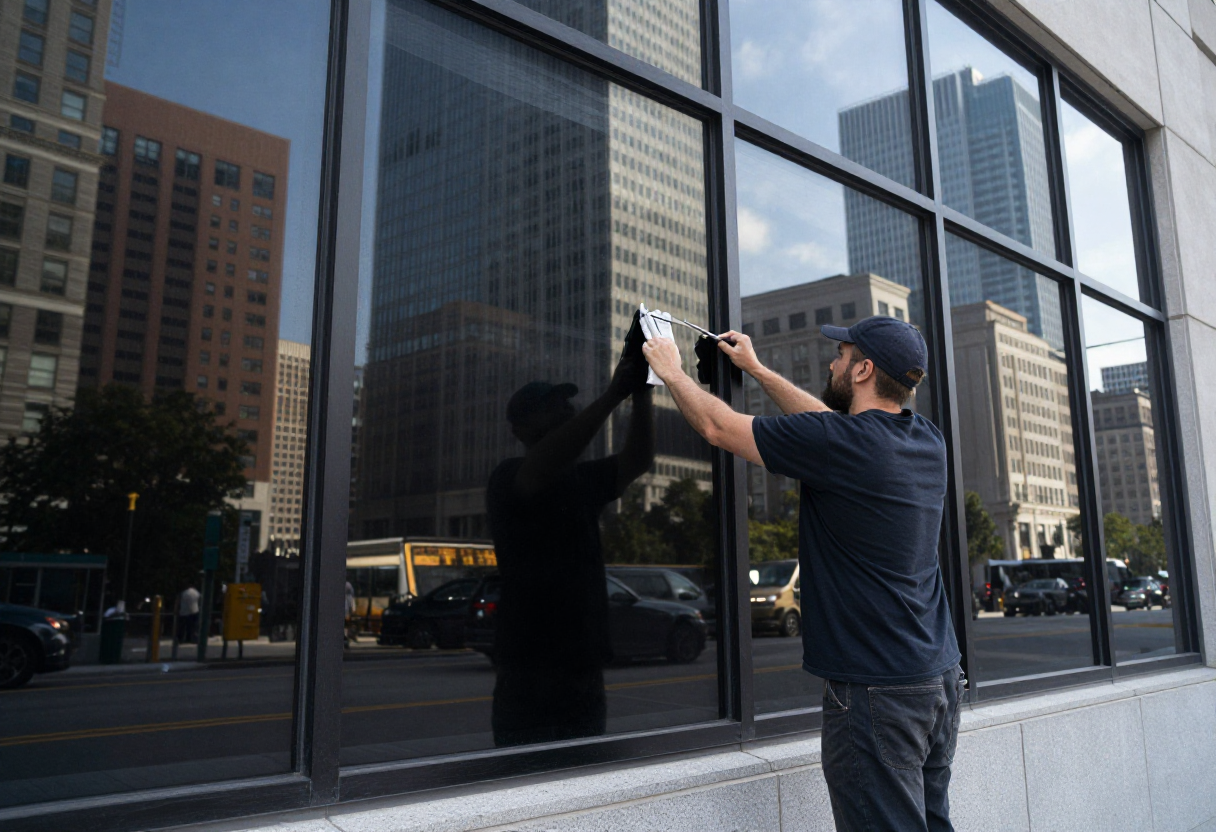
Most people notice the problem before they understand the cause. A room gets warmer near the windows. Due to the glare, the screen is not seen clearly. Flooring near the glass fades before the rest of the space. In vehicles, dashboards dry out and seats lose colour.
Curtains and blinds block light, yet the heat still builds behind them. The glass itself is letting energy pass through. Expertly installed window film changes how that glass performs. Professional installations use advanced film systems that reduce heat, filter harmful radiation and improve comfort without shutting out daylight.
1. What Sunlight Actually Brings Through Glass
Glass looks solid and protective. In reality, it allows a significant amount of solar energy inside. The warmth you feel near a window is not imagined. It is an energy transfer.
Sunlight contains different types of radiation, and untreated glass does not block most of it.
- Visible light allows natural brightness indoors.
- Infrared radiation carries the majority of heat.
- Ultraviolet radiation contributes to fading and material damage.
- Standard glass allows much of this energy to pass through.
- Heat builds up as interior surfaces absorb solar radiation.
Window film acts as an additional filter. It reflects, absorbs or disperses part of this energy before it spreads through the room.
2. Infrared Rejection and Indoor Temperature
If a space heats up quickly during the afternoon, infrared radiation is usually responsible. You do not see it, though you feel the effect within minutes.
Reducing infrared transfer can noticeably stabilise indoor temperatures.
- Infrared radiation is the primary source of solar heat.
- Untreated glass allows infrared energy to pass indoors.
- Interior surfaces absorb that energy and release heat into the air.
- Cooling systems work harder to compensate.
- Energy consumption may increase during peak sunlight hours.
Modern solar control films are engineered to reduce this transfer. Some reflect infrared energy outward. Others absorb and distribute it across the glass surface to limit indoor penetration.
3. Ultraviolet Protection and Interior Preservation
Fading happens slowly. Many property owners do not notice until the contrast becomes obvious. And the damage has already occurred.
Ultraviolet radiation is the main reason for the deterioration.
- Ultraviolet rays disintegrate dyes and surface finishes.
- Timber flooring can lose its depth of colour.
- Upholstery may weaken over time.
- Artwork and displays are especially vulnerable.
- Standard glass blocks only part of the ultraviolet radiation.
High quality window films can block up to 99% of ultraviolet radiation. This helps preserve interior materials and supports better skin protection for occupants near windows.
4. Nano Ceramic Film Compared with Traditional Tint
Not all window films are built the same way. Older tint products often rely on dyes or metallic layers. Performance varies depending on the construction method.
The differences become clearer when comparing technologies.
- Dyed films absorb heat and reduce glare.
- Dyed layers may fade after years of exposure.
- Metallic films reflect heat effectively.
- Metallic coatings can interfere with mobile and radio signals.
- Signal interference may affect navigation systems in vehicles.
Nano ceramic films contain microscopic ceramic particles embedded within multiple layers. These particles are non metallic and non conductive. As a result, they provide strong infrared rejection and ultraviolet protection without signal disruption.
5. Choosing the Right Film Is About Performance, Not Darkness
A darker shade does not always mean better heat rejection. Film performance depends more on internal technology than on appearance.
Several factors influence which option suits a property.
- Glass type affects overall performance.
- Window orientation changes solar exposure levels.
- Residential and commercial spaces have different comfort needs.
- Vehicle glass composition can vary.
- Professional installation ensures correct adhesion and longevity.
An expert installer can assess these elements and recommend a suitable solution. The right application ensures visibility and durability.
Conclusion
Window film improves the way glass handles sunlight. It helps reduce heat from infrared radiation, blocks most ultraviolet rays that cause fading and damage, and cuts down glare while still allowing natural light into the space.
Modern nano ceramic films perform better than older types of tints. They provide strong heat and ultraviolet protection without fading over time or interfering with phone and radio signals. Knowing how these films differ makes it easier for property owners to choose a solution that improves comfort, protects interiors and supports better energy use.
Window film reduces heat and protects interiors in homes, offices and vehicles. For professional window film installation, get in touch with SolarTint Essendon.


